

Editor’s note: This article was first published in December 2016; Warren Buffett’s fortune and wealth ranking, the Berkshire Hathaway share price and the amount his children would receive are from that year. In 2024 Buffett said most of his estate would go to a charitable trust run by his three children.
Warren Buffett has an estimated fortune of 60,000 to 70,000 million dollars and is one of the 3 richest men in the world, and many people predicted his success from the time he was a child: he was already passionate about the stock market at 11, the age at which he said he made his first investment in shares.
By the age of 16, Buffett had managed to build up the equivalent of 53,000 of today’s dollars. A Quora thread asked for striking facts about Warren Buffett that people might not know so well, and we found some striking (and verified) answers.
See also: Warren Buffett’s 16 best investment tips
1. While his classmates dreamed of being football players or Hollywood actors, at 10 Buffett had lunch with a Wall Street executive on a trip to New York with his father.
Buffett was drawn to this man’s ideas, and you could say that he planted the seed of interest in the stock market in young Buffett’s head. From then on, Buffett began to plan his future around finance, and the world of the stock market and business became his passion.
2. As a teenager, Buffett earned 175 dollars a month, more than his teachers and many adults were earning.
Buffett started delivering the Washington Post door to door, and he also used his delivery route to sell calendars and other things to his customers. That way, along with a few other business ideas, he managed to build up 53,000 dollars by the age of 16.
Selling used golf balls, polishing cars and pinball machines
Buffett knew that if he wanted to make money, he had to earn it. And his mind was a constant generator of ideas.
If you were a golf lover in 1940 and wanted cheap golf balls, Buffett would sell them to you. He used to walk around golf courses looking for lost balls, and he’d sell you a dozen for 6 dollars. When he saw there was money to be made from golf balls, he started working with a distributor in Chicago.
His first teenage “business partnership” was a car-polishing business, but Buffett found it wasn’t a good business, because it took a lot of manual work to earn a little money. Buffett learned a business lesson: if you have to work your business hard to make money from it, it isn’t a business, it’s a job.
So he moved on to pinball machines. He saw that by placing one of these machines in a bar, all he had to do was come by and collect the takings. With the profits from the first machine he bought a second, and so on.
All these stories appear in the book The Snowball.
3. Buffett was rejected by Harvard.
Harvard Business School has the highest percentage of successful people among its students, and Warren Buffett was turned down by this university. Buffett later admitted that it frustrated him somewhat, as he thought he had more than passed his admission interview. In fact, he told a friend of his to go to Harvard with him, taking it for granted that he’d be admitted. That wasn’t the case.
So in the end he opted for Columbia University, where only a written application was required and no personal interview.
4. Benjamin Graham refused to work with Buffett.
For Buffett, Benjamin Graham, author of The Intelligent Investor, the bible of investing, was his greatest idol. Buffett proposed that they work together, but Graham turned him down. When Buffett asked why, Graham simply replied: “Because you’re not Jewish.” Graham wanted to keep that place for someone Jewish, because of the problems Jewish people had in finding work on Wall Street.
But Buffett tried again later, until Graham gave in and hired him. Which goes to show that persistence can end up paying off.
5. Buffett was very shy, so he had to do something about it.
Warren Buffett considers himself a very shy and introverted person, with a real panic of public speaking. At 21, he was already aware that success in business requires some communication skills, so he decided to get rid of his fear of public speaking by spending 100 dollars on a course by Dale Carnegie, author of How to Win Friends and Influence People.
According to Buffett, thanks to that course he found the courage to propose to his current wife.
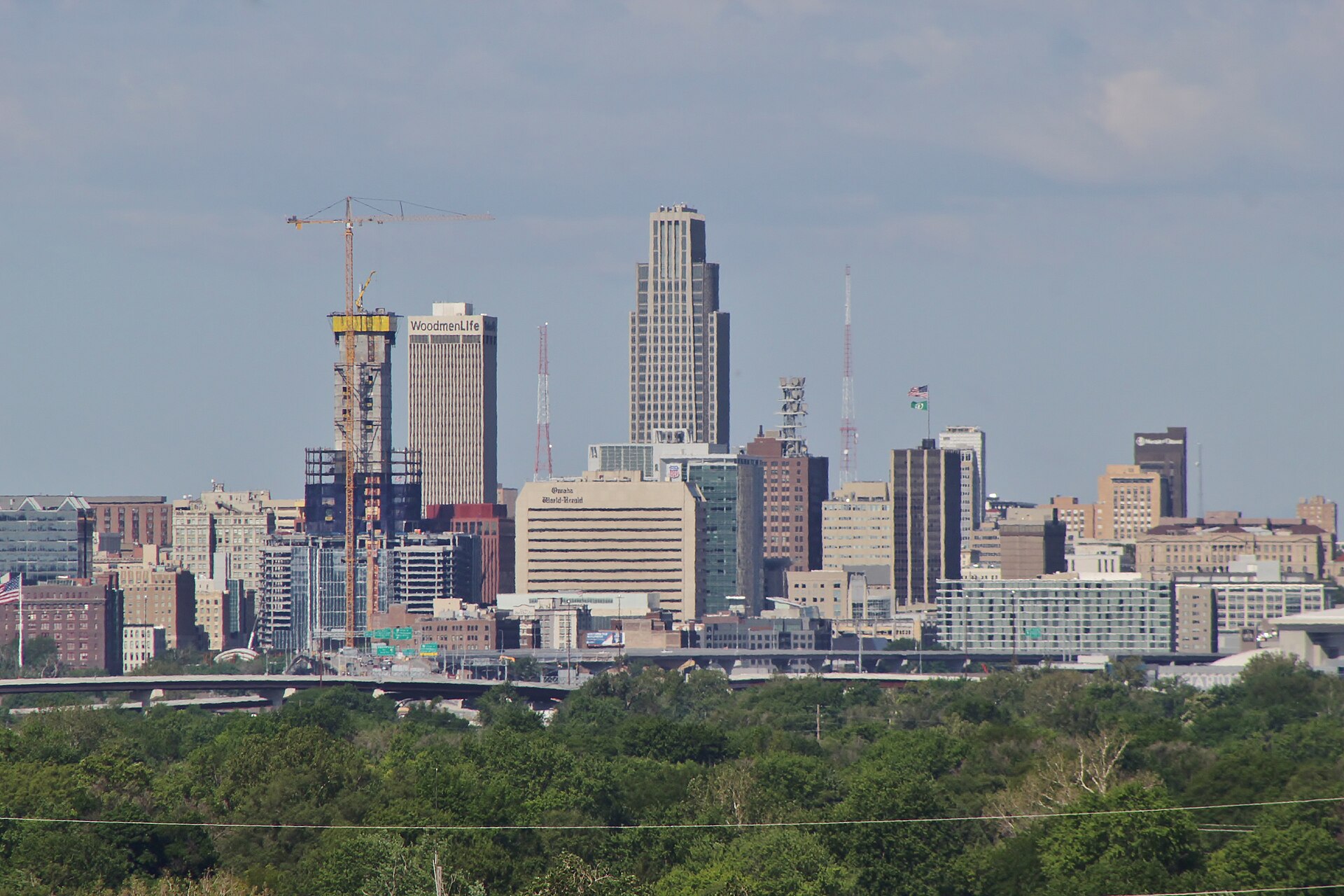
6. Warren Buffett lives in the same house he bought 60 years ago.
If you live in Omaha, Nebraska, and you’re middle class, your neighbour could be one of the richest people in the world, even though your house has more luxuries than his. That’s what the book The Millionaire Next Door was about.
Of course, these days simply having Warren Buffett as a neighbour has sent house prices in the area soaring: the house next door to Buffett’s sold for just over 2 million dollars.
7. Buffett spends 80% of his time reading.
This habit is probably what has made Buffett who he is. He hasn’t stopped learning a single day of his life. And this habit also keeps his mind in shape.
See also: 8 books Buffett thinks you should read
8. 99% of his wealth was made after he turned 50.
Those who aren’t very familiar with the magic of compound interest will find this hard to understand, but Buffett’s fortune is due precisely to that: money invested for decades, to which the new money generated by the returns keeps being added. After he turned 50, Buffett’s fortune began to soar.
See also: This is how compound interest works
9. Although he’s a dinosaur in a technological world, he’s still the best investor.
When someone tells you that value investing no longer works, that it can’t be done these days, remember that Warren Buffett is still “kicking the butt” of Bill Ackman, David Einhorn or Walter Schloss.
Buffett is the investor with the best average return today, year after year.
See also: These are the only two books you need to read to understand stock market investing
10. If you had invested just €1,000 in shares of Warren Buffett’s company in 1964, today you would have more than 13 million euros.
When Buffett took control of Berkshire Hathaway in 1964, the company’s shares were trading at 19 dollars. Today, the company’s shares trade at 248,000 dollars.
11. Buffett will leave his children only 1% of his fortune when he dies.
Warren Buffett believes his children should inherit enough money not to have financial problems, but not so much that they don’t feel like doing anything. To that end, Buffett joined Bill Gates and his wife in their foundation, pledging to donate 99% of his fortune to philanthropic causes.
My question would be: “Will his children get by on just 1% of his fortune, which will only be 700 million dollars?”
12. Buffett makes mistakes too.
Warren Buffett isn’t perfect as an investor. He has made several bad investments that cost him a lot of money. Among them was a bad investment in ConocoPhillips that cost him 1,000 million dollars. Buffett’s investment system (value investing) says you should buy good companies at low prices. In this case, Buffett got his analysis wrong and bought a mediocre company at its highest price, only to watch his investment lose value day after day.
He also had his small business failures with some business ideas, but failure is only failure when you don’t learn its lessons. In Buffett’s case, his failures have helped him refine his approach even further.
13. In 2013, Buffett made an average of 37 million dollars a day.
According to Forbes, Jennifer Lawrence was the second highest-paid actress in the world, having earned 34 million dollars that year. Buffett made more money than she did in a single day (and every day).
14. According to Berkshire Hathaway’s accounts, Buffett is one of the lowest-paid executives.
Buffett pays himself a salary of only 100,000 dollars a year, and says that thanks to his frugal lifestyle he manages to live on it and even save. On Wall Street, any executive, CEO or managing director earns a salary in the millions.
15. For Buffett, happiness has nothing to do with money.
Although it might seem contradictory, given that Warren Buffett has lived a life that revolved around money, the truth is that business and investing have simply been his passion. For Buffett, happiness isn’t measured by financial success but by “how many of the people you want to have love you actually do love you”. That’s what happiness is for Buffett.
16. Buffett’s best investment.
Buffett believes there’s one investment everyone should make, because it’s the wisest, the most profitable and the one that can bring you the most financial and personal success. That highly profitable asset is you.
See also: 8 life lessons from Warren Buffett
Featured image: SounderBruce, CC BY-SA 4.0, via Wikimedia Commons.



