

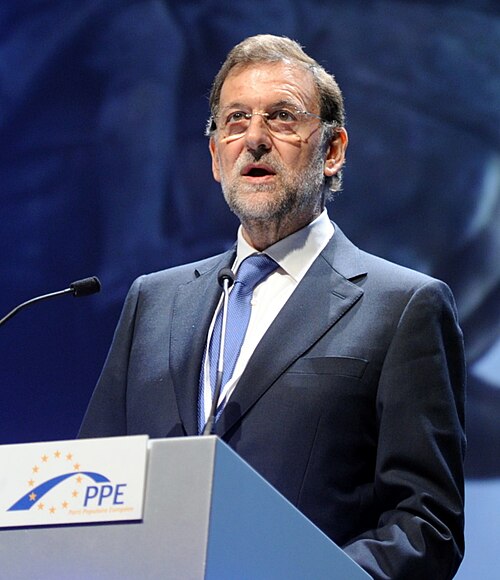
Editor’s note: This article was first published in November 2011, on 29 November, days after Rajoy won the general election and before he took office. The government later raised income tax (December 2011) and VAT (2012); the article’s speculation predates both.
Spain is already in a technical recession: GDP growth was zero in the third quarter, while expert analysts are forecasting a slump in revenue. Right now, Mariano Rajoy has to make a mandatory cut to the deficit without forgetting that he must maintain public investment in services such as education, healthcare, unemployment benefits and pensions, because that is what the new government has promised.
The CEOE (Spain’s main employers’ confederation) and the Círculo de Empresarios (a business leaders’ association) predict that Spain will miss the commitment it made to Brussels to reduce the hole in the public accounts to 6% of GDP this year, so the government will have to find the money however and wherever it can.
According to Ideal.es, the Tax Agency is already preparing for a VAT rise, which Mariano Rajoy has not yet decided on, although Brussels and many experts are calling for it.
More and more voices are warning that cutting and adjusting won’t be enough, because these measures produce savings for the government by reducing public spending but don’t solve the problem of revenue coming into the state’s coffers. The European Commission already called for a VAT rise in June this year, and the Bank of Spain and the Spanish banking association joined in. So, going back to the experts’ arguments, the government will have to reach for the biggest money-making machine of all: VAT.
At the time, I was already sceptical when Rajoy proposed cutting taxes to boost consumption. Not for any particular reason; simply, as I argued then, no country can cut taxes in times of crisis, because that’s like emptying the wells in a drought. Since we’re not talking about politics but about economics, the truth is we knew that whether it was Rajoy or Rubalcaba (the Socialist candidate), taxes would have to go up, and anyone who believed otherwise, I’m sorry, has been deceived.
It’s true that Mariano Rajoy hasn’t announced anything yet, so we could be speculating about the government raising VAT. But everything suggests, given the country’s serious situation, that it will be necessary, especially since the markets are demanding it. Perhaps Rajoy will surprise us and decide not to carry out the markets’ “orders”. That would be a pleasant surprise, if a somewhat utopian one.
For now, what is being studied, and will probably happen very soon, is a tax rise on tobacco, alcohol and petrol. Raising taxes on alcohol and tobacco might lead to nothing more than general discontent and some protest. Raising petrol taxes, on the other hand, would push inflation up again and trigger protests by hauliers and farmers.
Healthcare, education, unemployment benefits, pensions and taxes. Within 14 months, at least two of these “sectors” will have to be touched, because otherwise the public accounts won’t add up. Either Mariano Rajoy has an ace up his sleeve or he will have to break two of his election promises.
The new government’s exam begins.
Featured image: European People's Party, CC BY 2.0, via Wikimedia Commons.



