

From a very young age I was able to “read” people and their body language. I thought it was an innate talent or a kind of intuition, until I came across Malcolm Gladwell’s book Blink, in which he explains that intuition is nothing more than accumulated experience. In other words, people who follow their intuition will get better or worse results depending on their experience.
I then went on to study people’s psychology more deeply: body language, facial expressions and so on. All of this is certainly useful in sales and negotiations, and by extension even when you meet someone in your personal life.
Over time I have also come across authors and books that talk about reading people through certain signals they give off, but from a point of view that I can now say is mistaken.
Although there are universal patterns that apply to everyone, some authors have forgotten that behaviour patterns exist, and this makes it hard to read the body language of someone we don’t know at all.
An example I always give is the belief (a false belief) that when you are on a date with a girl and she is stroking her hair, it means she likes you. This belief is wrong, because that gesture often signals boredom or lack of attention rather than attraction. It might also mean nothing at all, other than a habit that girl has of touching her hair, just as other people habitually bite their nails (and aren’t necessarily nervous). In other words, we can misinterpret an isolated signal if we don’t really know that person.
See also: Body language mistakes that could cost you the job
Put another way, trying to read a single signal in a person may be useless. You have to look for a set of signals, or a sequence of them. Going back to the previous example: if, as well as stroking her hair, the girl is smiling, giving you her full attention, tilting her head slightly, and her body shows an open posture, even leaning towards you, then we could be talking about possible interest in you.
And let’s not forget that sometimes you don’t know why you sense sadness in the eyes of someone with a friendly, cheerful character, or why someone gives you bad vibes at first sight without showing any signal at all, and you are rarely wrong.
How to read people’s body language: some techniques
It gets even more complicated if we ignore a person’s behaviour patterns
Suppose a girl is flirting with you. Apparently the signal could not be clearer. But what happens if that girl flirts with everyone in the same way? Then we are talking about a very sociable, outgoing person. What looked like a set of very clear signals that a girl liked you becomes the complete opposite the moment you start seeing the person, and not just what you wanted to see.
If you want to gauge that person’s interest in you, you will need to look for an isolated behaviour pattern that only occurs with you and not with everyone else.
Beyond the universal body language signals (and there are very few of them), the only way to read people correctly is to make a real effort to observe that person in all their states.
Everyone is different, even in their body language
I’ll use myself as an example. Not long ago, a behaviour analyst spotted a pattern I was repeating unconsciously. Your unconscious gestures are excellent “tell-tales” of your conscious mind for anyone who wants to read you.
Take two photos of me, call them photo 1 and photo 2. Compared with each other, they might not say much about my mood at that moment or about how much I liked each of the people I was posing with. But when this analyst looked not just at these two photographs but at more than twenty, she found something that would go unnoticed by most people (and that had gone unnoticed even by me).
The hand
It turns out that in this kind of pose, when my right hand is around someone’s waist, it speaks for itself. In photo 1 it shows that I want to stay and want that person to stay. In photo 2 I wanted to leave, which is why not all my fingers are resting against the waist.
After going through numerous photographs of this kind, I was able to confirm that I follow this pattern in more than 90% of cases.
And, now that I’ve said it, from now on I’ll make sure all the fingers of my hand stay firmly in place so there are no problems.
Spotting a fake smile
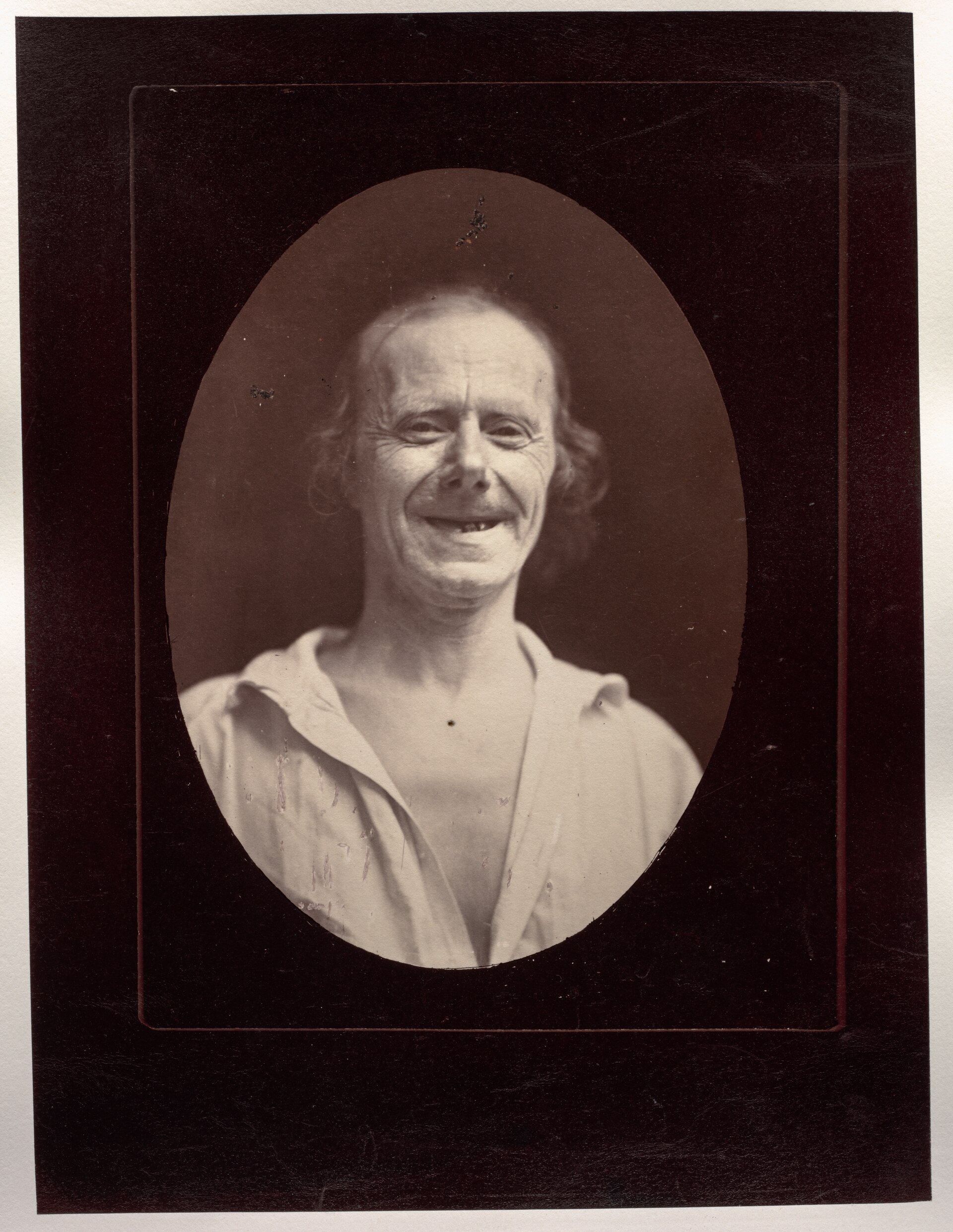
It is usually said that to spot a fake smile, you should look at the wrinkles on the forehead and around the eyes. If there are no wrinkles, the smile is fake. However, the most effective way to spot a fake smile is to see a genuine smile first. That is when we can measure the level of wrinkling, because some people barely wrinkle at all when they laugh.
A universal signal: the face turns pale
This signal shows fear or danger, and it can’t be controlled. One of our genetic defence mechanisms is that when we become aware of danger, our body sends blood to the legs so that we can run away. That is why a fright leaves you pale.
If we could measure the temperature of someone’s hands at that moment, we would notice that when a person is afraid, their hands become colder. That is also why, when two people are about to fight, their faces turn pale. When this signal appears, it unmistakably indicates danger and fear.
When someone points a finger at you with a closed hand
They say pointing is rude, but the truth is that it is an attempt to dominate by the person pointing at you, and it is a gesture often used by violent people. In a high percentage of cases, it is the signal that this person would have no problem resorting to physical attack. Hence its use by Robert De Niro in his usual mobster roles.
Unsolicited, pre-emptive information
What do people have in common who, without anyone questioning their integrity or honesty, keep repeating “I’m a very honest person”? Most likely you are dealing with someone who is fairly dishonest and tells plenty of lies.
Imagine you don’t know me at all and I introduce myself by saying: “Hi, my name is Carlos and I don’t take drugs. Seriously, I’ve never taken drugs.” It’s more or less the same thing as “just so you know, I’m a very honest person”.
The body language of the feet
You can tell whether someone you’ve run into and started talking to is comfortable talking to you or wants to leave. All you have to do is watch their feet. If they turn their torso to talk to you but their feet are not pointing in the same direction, they probably want to leave and have only stopped to talk out of politeness.
Sometimes this is done unconsciously, although in my case I have even said goodbye and turned my back on someone, and they still wanted to carry on the conversation. Some people are very slow to pick up even the most obvious signals.
Raised eyebrows
Raised eyebrows usually indicate one of several feelings: surprise, worry or discomfort. If you are talking to a client or getting to know someone and you notice their eyebrows go up after something you’ve said, you have probably put your foot in it, if the rest of their face stays the same. If, on the other hand, we notice a micro-smile or they tilt their head back slightly, we have said something that surprised that person (for better or worse, depending on the shape of the micro-smile).
The person is comfortable with you: the mirror effect
When two people like each other, they unconsciously start imitating each other’s gestures. The other person drinks when you drink, tilts their head the way you tilt yours, and laughs when you laugh. That is why mirroring is a way of influencing people. All you have to do is imitate the other person’s body language. Their subconscious will register a similarity. However, on a date, if they don’t like you, they don’t like you, no matter how much you imitate their body language.
A gradual or sharp change in body language and facial expressions
Sometimes you are talking to someone who seemed interested, and suddenly they lean back in their chair and cross their arms. We have lost that person’s interest. The reverse can also happen: someone who was reluctant or slightly uninterested gradually opens up their posture, leans towards us, and even their eyes show growing attention.
Eye contact
Eye contact has become increasingly complicated. In the past, liars were caught because they broke eye contact. Things have changed now that liars know that breaking eye contact can be a sign of lying. So liars now tend to fix their eyes on yours, even without blinking, because they know that people telling the truth look you in the eye without fear. That makes it rather confusing to rely on eye contact alone, because even when you are comfortable with someone, or you like a person, it is perfectly normal to fix your eyes on theirs.
The fact that someone constantly breaks eye contact while talking to you doesn’t mean they are dishonest or lying to you. Often it also means that the person may be a little shy, or that you are intimidating them with your own eye contact. And mind you, intimidating someone isn’t always a bad sign, because a person who is attracted to you is often more easily intimidated (in the good sense of the word). As you can see, it’s a real tangle.
The visual once-over
We can’t call it distrust, but when most people aren’t satisfied with what they see at a glance, or don’t fully trust someone, they tend to look the other person up and down, often when that person doesn’t notice.
Likewise, when a man pays more attention to, or more often looks at, certain parts of a woman’s body (bottom, breasts…), the woman can already get an idea of what it is about her that caught his attention.
There are other, more obvious signals, such as a frown (anger, displeasure…) or someone who keeps laughing with you even though you’re telling bad jokes, while a shrug shows uncertainty. But we must not forget that every person has their own body language, shaped by their own behaviour patterns.
If you have taken the trouble to get to know someone over a long time, you will spot anything out of the ordinary. That is why it is often said that when someone is unfaithful to their partner, they have sent out more than 20 signals that they are cheating, because certain behaviours and patterns have changed. Many of these signals have been noticed by the other person, who has either chosen to ignore them or failed to read them correctly.
Still, what we are trying to make clear here is that, in most cases, a single signal on its own tells us nothing. We need to see much more, find sequences of signals, and even create situations to uncover behaviour patterns.
Recommended books on the subject
- The Definitive Book of Body Language, by Allan Pease
- Telling Lies, by Paul Ekman
Featured image: Guillaume-Benjamin-Amand Duchenne (de Boulogne), CC0 1.0, via Wikimedia Commons.


