

Editor’s note: This article was first published in June 2013. Trump’s “estimated fortune of more than $2 billion”, Kiyosaki’s “recent” bankruptcy (Rich Global LLC, 2012) and Branson’s “more than 200 companies” are figures from that time.
We often hear about the great successes of certain entrepreneurs, and ordinary people see it as something very distant. We even try to console ourselves by saying that these great business people simply got lucky. Perhaps if we knew about some of the “bumps” they hit along the way, we would recognise that persistence is what took them to success, because some people would have thrown in the towel. In fact, millions of people have thrown in the towel, some of them even before the fight began. A while ago we talked about Corey Capasso, a young entrepreneur who succeeded after failing 15 times. Today we look at four perhaps better-known business people who tasted failure before they breathed the air of success.
1. Donald Trump
Donald Trump (Mr. Think Big) has an estimated fortune of more than 2 billion dollars. When we hear about Trump, what comes to mind is a person of success, fame and popularity (and gaffes on Twitter). The truth is that Donald Trump came close to being remembered today as one of the biggest business failures in the United States, because bankruptcy caught up with him.
Trump started working in his parents’ company, a real estate business, at the end of the 1960s. He quickly began to generate large amounts of money, especially from a big project in New York where he made a profit of 12 million dollars in just two years. He also made a profit of 6 million in 12 months by restructuring a huge hotel complex with 44% occupancy, which he managed to bring to 100%. It was clear that Trump had a gift for business.
But in 1989, Trump learned one of the lessons he was probably not prepared for. He fell into excessive debt. Nothing serious at first glance, but it is the death of any company if a recession catches it in debt.
Because of the construction of his new casino, the Taj Mahal, Trump had taken on 1 billion dollars in junk bonds plus 550 million in debt that fell on him personally (personal debt).
By 1994 his personal debt had risen to 900 million dollars, which was by then impossible to repay. Technically, Trump was bankrupt, ruined and in debt. That is where the advice to “personally guarantee as little as possible” comes from.
How did Donald Trump get out of bankruptcy? Trump wrote in his book The Art of the Deal that he got a call from all of his creditor banks, which were about to fight like vultures to be the first to collect whatever they could. Trump, however, somehow managed to reach an agreement with the creditors to restructure his debt. He reduced his shareholding in the company from 57% to 26%, which he used as a form of payment, and changed the name of his company to Trump Entertain Resorts Holdings. Not only did he get some of his debts refinanced, he later got more money from his creditors to carry on with his businesses.
That is why we sometimes say that in business, people tend to trust someone who has failed five times more than someone who has never failed, because the first one is at least an entrepreneur. The second hasn’t failed because they haven’t even started yet (with exceptions, of course).
2. Robert Kiyosaki
Kiyosaki’s story is a curious one, mostly because he is one of the business people who has been bankrupt the most times. Sometimes it was real bankruptcy and other times fake bankruptcy. As you may know, Kiyosaki recently filed for bankruptcy again. Evidently, a fake bankruptcy to avoid paying part of a contract. He has probably turned to offshore asset protection.
I still say that Kiyosaki wrote the best book on financial education, but on some details he was not as honest as he could have been. Robert Kiyosaki started out in business by creating a company that sold wallets. The business went quite well until the competition crushed it. In his book he says he left the business because he didn’t like the way the Chinese (or Indian) factories treated their workers. That is very humane of him, but the truth is that giants entered his market and devoured it. It was the first time Kiyosaki declared a company bankrupt.
His second company sold T-shirts and lasted even less than the wallet company. That was his second bankruptcy. Kiyosaki was very clear about one thing: he didn’t want to work for anyone. There was a third bankruptcy, which happened when Kiyosaki went into partnership with a certain Marshall Thurber. Kiyosaki bought the company from him and drove it into bankruptcy too.
Kiyosaki didn’t find success until he partnered with the millionaire Miguel Angel Cruz Sánchez (CERTO), one of the first people he worked with, who would later teach him how to make money in real estate. He was probably the one who convinced him to give financial education seminars around the world.
Many journalists have questioned the truth of his stories, claiming that Kiyosaki didn’t make money until he started explaining to people how to make money, giving talks all over the world. Kiyosaki’s real businesses, the income that made him a millionaire, are these books:
- If You Want to Be Rich and Happy, Don’t Go to School (1992)
- Rich Dad Poor Dad: What the Rich Teach Their Kids About Money That the Poor and Middle Class Do Not! (1997)
- Rich Dad’s Cashflow Quadrant: Guide to Financial Freedom (2000)
- Rich Dad’s Guide to Investing: What the Rich Invest In That the Poor and Middle Class Do Not! (2000)
- Rich Kid Smart Kid: Giving Your Child a Financial Head Start (2001)
- Retire Young, Retire Rich: How to Get Rich Quickly and Stay Rich Forever (2001)
- Rich Dad’s Prophecy (2002)
- The Business School for People Who Like Helping People (2001)
- Rich Dad’s Who Took My Money? (2004)
- Rich Dad Poor Dad for Teens (2004)
- Rich Dad’s Before You Quit Your Job (2005)
- Why We Want You to Be Rich (with Donald Trump) (2007)
- Rich Dad’s Increase Your Financial IQ (2009)
- Rich Brother Rich Sister (2009)
- Rich Dad’s Conspiracy of the Rich: The 8 New Rules of Money (2010)
- The Business of the 21st Century
- Unfair Advantage: The Power of Financial Education (2011)
- Midas Touch: Why Some Entrepreneurs Get Rich and Why Most Don’t (with Donald Trump) (2011)
While we wait for “Rich Grandpa, Poor Grandpa”, we should add one more bestseller: Rich Woman, by his wife Kim Kiyosaki. The only profitable companies Kiyosaki is known to have are The Rich Dad Company and Cashflow Technologies Inc (the company that made the board game). Both companies were born after he became famous.
Many of Kiyosaki’s followers are offended when people say this, as if it took credibility away from Rich Dad Poor Dad, but the truth is that one thing doesn’t cancel out the other. The book is right. Let’s start from the fact that one of the best financial planners in the United States, Carl Richards, lost his house.
3. Richard Branson
What is Richard Branson doing on this list? The truth is that Branson, with more than 200 companies created, has never known bankruptcy, but he was born with some of the ingredients for not achieving success. Branson had dyslexia, and the problem was that back then nobody knew what dyslexia was. That made him drop out of school.
His first business came in 1966, when Branson was 16. It was a magazine called Student. Picturing a dyslexic person running a publication is hard to believe even today, but the project got off the ground. Before he turned 20 he had created two more businesses, including a bricks-and-mortar business on Oxford Street, London, and a recording studio. He fought his fears day after day. That is where one of Branson’s pieces of advice comes from: take on new challenges every day.
Today we know that many great business people, including Steve Jobs, were dyslexic. (Read: Four people who overcame their limitations.)
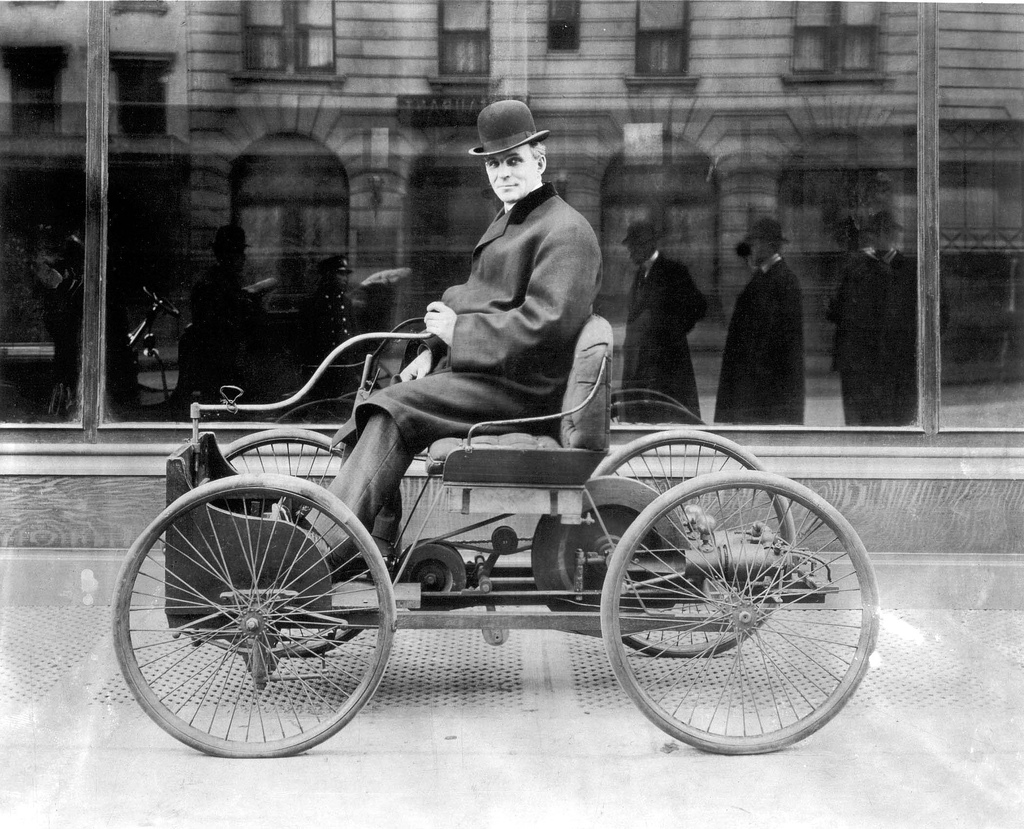
4. Henry Ford
Henry Ford started out as a watchmaker in the family business. In fact, he was known as the young watch repairer, but that wasn’t what he wanted. After his mother’s death in 1876, which left him devastated, he told his father he didn’t want to carry on with the family business.
In 1891, Henry Ford managed to talk to Thomas Edison about the new concept of the automobile. He wanted to be part of that change and build his own vehicles. He founded the Detroit Automobile Company in 1899 and, overwhelmed by debt, had to bring partners into the business to deal with what he owed. His first cars were poor quality and very expensive, so he couldn’t find a way to keep going and the company went bankrupt.
Henry came back to business even stronger, and months later he was setting up a new car company called “Cadillac”. Once again he ran into excessive debt and a lack of sales, and once again he had to ask for help by bringing in partners. In the end he achieved what he was looking for, a quality vehicle at a reasonable price, and changed the company’s name to Ford Motor Company. The rest, as they say, is history we all know well. For Henry Ford, the word impossible didn’t exist.
Further reading
- Donald Trump: the secret in business
- Ten leaders give advice to students and entrepreneurs
- Five things successful people do
Featured image: Spooner & Wells, Inc., Public domain, via Wikimedia Commons.



