ETFs and index funds are both passive investment products that offer an easy way to diversify. But what are the differences between ETFs and index funds? Both types of fund bundle several securities into a single investment. For example, when we talked about how to buy a whole index, we mentioned both ETFs and index funds, because an index such as the S&P 500 or the Nasdaq cannot be bought on its own.
In other words, you cannot invest directly in indices. What you can do is invest in a fund that tracks an index and replicates its movement.
Advantages of passive investing vs active funds
Before we look at the differences between ETFs and index funds, some readers will wonder why they should invest in these vehicles rather than the well-known actively managed investment funds or hedge funds.
The answer is simple. Most actively managed funds are unable to beat their benchmark index, even though they charge high management and maintenance fees. Passive funds have proven to be a more profitable long-term investment than hedge funds.
And it is not because fund managers are bad at their job. As we have explained before, if they stuck to small-cap investment ideas, hedge funds would beat their benchmarks.
See also: Why hedge fund managers don’t beat the market
We have also explained why you should start investing passively if you are young.
Differences between ETFs and index funds
Both ETFs (exchange-traded funds) and index funds combine many individual securities, such as shares or bonds, with the advantage that the investor can diversify with a single investment.
Both types of fund offer considerable savings on fees and maintenance costs compared with other investments, without lower returns. In fact, they deliver strong returns over the long term. They work in a very similar way, although there are some differences.
What is an ETF?
An ETF is an exchange-traded fund, a type of security that tracks an underlying asset such as an index or a mix of assets. For practical purposes, investing in an ETF is like owning a share (we explain this in more detail below).
What is an index fund?
An index fund is a type of mutual fund or exchange-traded fund that usually tracks and replicates the performance of a target index.
One of the most important differences between ETFs and index funds is how they are traded. ETFs can be bought and sold throughout the day, while index funds can only be traded at the price set at the end of the day.
See also: The only 4 things you need to know about investing
As a rule, ETFs require a smaller initial investment and tend to offer better tax savings than index funds, although we will see that, all things considered, both end up giving us the same benefits.
Advantages and disadvantages of an ETF
As we explained earlier, an ETF is an investment vehicle you can buy and sell on the market throughout the day as if it were a share.
But it does not exactly represent a share in a company. Rather, it is a basket of securities that can include a set of shares, bonds, commodities or a combination of these different investment products.
ETF issuers can, like an index fund, simply track an index, or they can design a more customised ETF to benefit more broadly from the market.
For example, you can create an ETF that invests only in the five biggest technology companies, or an ETF that holds all the companies that benefit from a rise in the price of oil.
That is why we find equity ETFs, fixed-income ETFs, industrial ETFs, commodity ETFs, currency ETFs, or ETFs that include a bit of each of these products (equities, fixed income and commodities).
How does an ETF work?
The fund provider creates an ETF and “sets it up” to track a particular index or asset. The ETF provider then buys the underlying assets and sells shares in the fund to investors. That is why, when you buy a share in an ETF, you own part of the fund, but not the underlying assets.
Because it works like a share and can be traded throughout the day (bought and sold on the market), an ETF’s market price can go up or down.
This is one of the main differences between ETFs and index funds, since index funds are traded only once a day, after the market closes.
Main advantages of ETFs
Owning an ETF lets you invest in many shares, bonds and commodities and in a wide variety of industries. ETFs are passively managed, which keeps operating costs down and means considerable savings for investors in fees and maintenance.
Also, as we have explained, passive funds tend to outperform actively managed funds over the long term. And because ETFs only pay tax when investors sell their investment, they can offer tax savings compared with mutual funds.
Advantages of ETFs
- Lower fees and costs than actively managed funds
- Tax savings (fewer taxable capital gains)
- Portfolio diversification
- Wider choice (more variety)
- Good long-term performance (if you have chosen the right ETF)
Disadvantages of ETFs
- Investors may be limited to large-cap companies (it is hard to find ETFs with a variety of small-cap companies)
- ETFs may be subject to other kinds of fees.
Advantages and disadvantages of index funds
An index fund is a type of mutual fund or ETF that tracks and replicates the performance of a particular market. Index funds usually replicate the underlying components of the index.
How an index fund works
The index fund manager pools money from many investors and builds a portfolio of shares, bonds or a set of individual securities. The value of the index fund will mimic (or replicate) the gains or losses of the index being tracked.
Some index funds track stock market indices, such as the S&P 500 or the Dow Jones Industrial Average, while other index funds track indices in other markets, such as bonds, commodities or real estate.
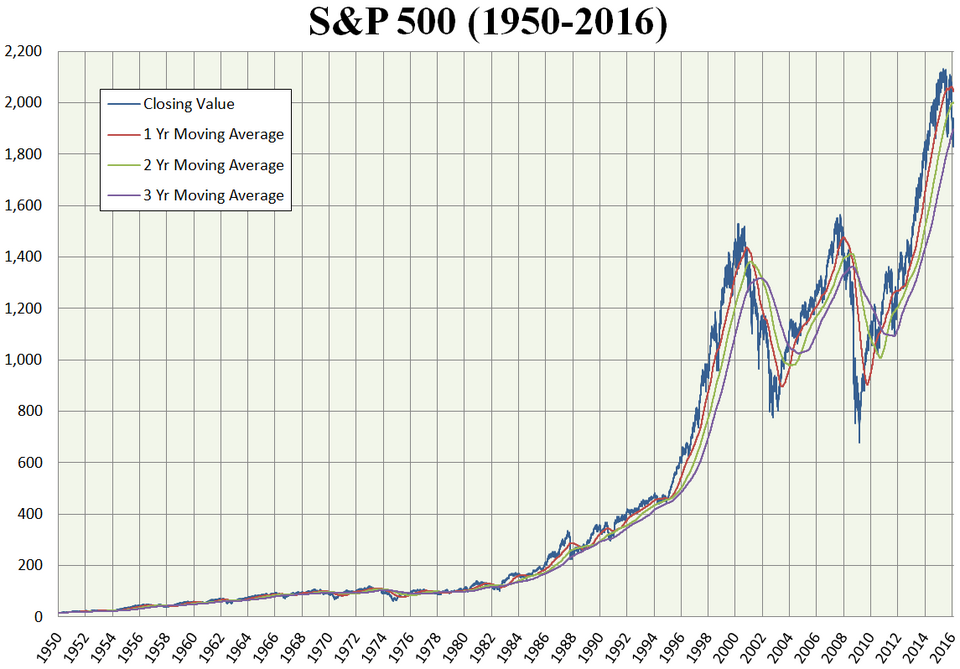
Index funds are excellent for investing in the world’s most important indices, because over a 10-year period indices tend to rise, regardless of when you buy (there will always be exceptions).
Although we can invest in index funds that group a handful of shares, or that diversify within a specific industry, ETFs would be better for that purpose.
The biggest advantage of an index fund lies in replicating the whole index. To do this, the index fund manager will buy shares in all the companies that make up the index, or shares in a representative sample of it.
In that case, the index fund manager has to use a weighting strategy, which the investor should be aware of.
Types of index fund by weighting
Most index funds are weighted by market capitalisation. This means the index fund buys more shares in large companies than in smaller ones.
Other index funds are price-weighted. This means that higher-priced assets make up a larger share of the fund than lower-priced assets.
And finally there are equal-weight index funds, in which all assets receive the same weighting.
After choosing this strategy, the index fund manager sells shares in the fund to investors, regularly adjusts the weight of the assets in the portfolio and then passes on dividends, interest and capital gains to the fund’s investors. And this is what makes index funds more interesting.
They are certainly a good way to minimise investment risk: share prices can go up or down, but indices always try to include the companies that are doing best, and over the long term the index tends to rise. Index funds also have low fees and lower costs than actively managed funds and mutual funds, with correspondingly better returns on investment over the long term.
Advantages of index funds
- Low risk thanks to broad diversification (historically, the index rises over the long term)
- Better long-term returns than actively managed investments
- Lower costs and maintenance than other investments
Disadvantages of index funds
- Not advisable if you are looking for short-term gains (this kind of investment is designed for the long term)
- They can only be traded at the end of the trading day.
- As a rule, more capital is needed to invest in index funds.
- Less choice of funds than with ETFs (if you want to invest in a group of shares from one sector, there is more on offer in ETFs)
Final tips
Both index funds and ETFs (with their respective differences) are among the investments considered lowest risk, with low maintenance costs and designed for the long term (especially index funds). But each individual investor should work out which type of product suits them best.
Depending on your expectations, or your “taste in investments”, an index fund may suit you better than an ETF, or vice versa.
When choosing an ETF or an index fund, you should check what asset the fund tracks and whether you really like the fund’s diversification. Then read carefully through the expenses and other fees the investment might carry depending on the issuer, such as fees for buying or selling your position in the fund.
Alternatives to index funds and ETFs
Finally, remember that at some point you can build your own ETF or index fund, diversifying across a set of securities and markets yourself, and gradually investing a set amount of the money you have earmarked for investment at regular intervals.
You can design a diversified portfolio within an index to apply a long-term DCA strategy to solid stocks, or you can build yourself a portfolio of solid dividend stocks.
You also have the option of combining both strategies, which has proven to be a very profitable long-term investment.
The drawback is that to have broad diversification across shares, you would initially need a lot of capital. This is where it makes sense to invest in an ETF that matches the companies we want to invest in, or in a low-cost index fund with low minimum capital requirements.
Further reading: Don’t ignore the role of luck and randomness in investing
Featured image: Overjive, CC BY-SA 4.0, via Wikimedia Commons.