

Editor’s note: This article was first published in November 2012 during the Spanish economic crisis; its remarks about the crisis and about starting a business being easier than finding a job reflect that period.
The failure rate for new entrepreneurs is around 80% within three to five years. As we’ve said before, starting your own business may well be the only way out for many people during this crisis, since that path will be much easier than finding a job. The statistics, of course, don’t match the enthusiasm.
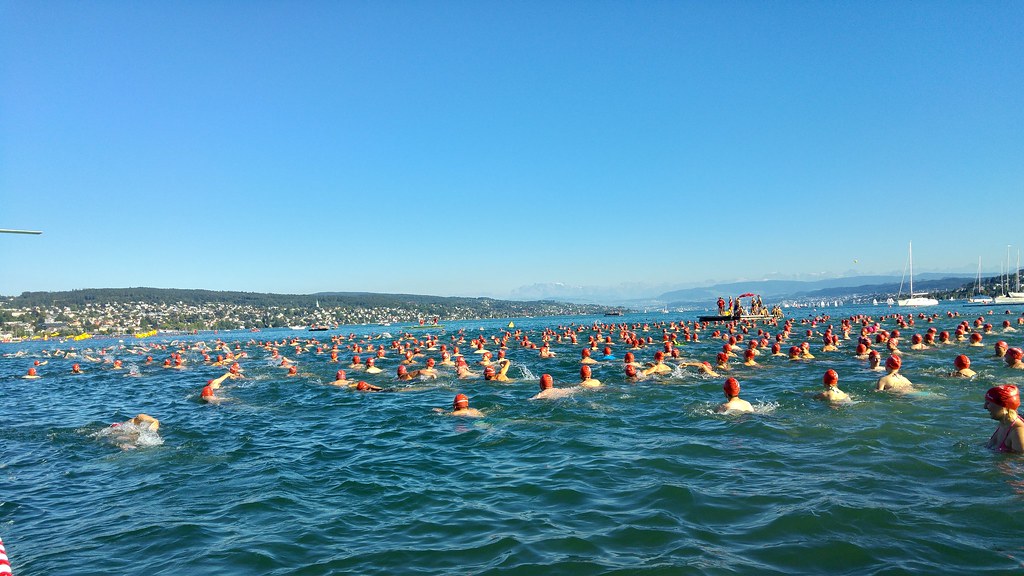
Over time we’ve published several articles on the reasons a new business fails and the main causes of failure, both in business and in life in general. But to understand it in a much more basic way, let’s imagine we’re people who set out to swim across the lake in the photo. Once we’re in that situation, these are the cases we’d find.
1. The expert swimmer.
A born swimmer. He knows the lake is 5 kilometres long. He has crossed other lakes before, perhaps smaller, perhaps larger; sometimes he made it and other times he turned back, but he’s willing to take on the challenge again. He is a professional, a natural swimmer: a born entrepreneur.
2. The one who can’t swim.
This person never learned to swim and never made any effort to learn, but is forced to cross the lake. Instead of spending some time learning to swim, he dives straight in head first and immediately drowns. He’s one of those people who, faced with a lack of jobs, has no choice but to start a business, but never prepared for it.
3. Those who can swim a bit, split into two groups.
Most people belong to this group, because they can swim. They’ve never tried to cover a distance of 5 kilometres, but, like those in group 2, they have no choice. What will happen to these people when they face the challenge?
Group 1: 80% summon the courage needed to cross this 5 km lake. They are fully motivated and convinced they’ll make it. They don’t check the water temperature, nor do they care. They don’t follow any particular strategy. They simply start swimming fast, because they’re in a hurry to get there. Once they’ve covered the first kilometre, fatigue starts to take its toll; at 2 kilometres they begin to lose motivation. At 3 kilometres they’re so tired they can’t go on and take it for granted that they won’t make it. They can no longer manage the two kilometres left to reach the far shore, but turning back isn’t an option either, because the starting point is even further away than the finish. They usually drown.
These are the entrepreneurs who throw themselves into a venture with enthusiasm but don’t do any market research or business plan, and barely know the product or the environment they’ll be operating in. They made the mistake of not planning an exit strategy, and so they sink with the business.
Group 2: The remaining 20% have the same swimming experience as the first group, but they work everything out before diving into the lake. They develop a strategy so that if, after 1.5 km, they see that fatigue won’t let them reach the finish, they’ll have enough strength in reserve to swim back to the starting point and try again another time. These are the entrepreneurs who know failure is a possibility but wouldn’t be the end, so they don’t put everything into the business. Some of them succeed and others don’t, but whatever the outcome, they try again.
See also: How Jeff Bezos, Mark Zuckerberg and other entrepreneurs became self-made millionaires
4. Can swim a bit, but is special.
Like those in group 3, this person can swim without being an expert. He’s never crossed a lake before either, but he is consistent, persistent, has high self-esteem and self-confidence, and is one of those people who usually achieve whatever they set out to do, or at least give their last drop of energy trying.
He knows the lake is 5 km long, he knows it isn’t easy, but he knows others have done it. He dives in and starts swimming. This person doesn’t look back, doesn’t know how far he’s come and doesn’t care, because he has no intention of turning back. Fatigue takes hold of him, but he only looks at the mountains getting closer and closer, which mark the finish. He won’t stop swimming until he reaches the other side. If he gets a cramp in one arm, he’ll swim with the other; if fatigue won’t let him go on, he won’t think about the fatigue, only about the goal.
He’s the entrepreneur who, when asked one day how he succeeded, usually replies that anyone can do it with motivation, hard work and effort, and, obviously, a basic knowledge of swimming.
Before you start a business, ask yourself what kind of swimmer you think you are.
Further reading
- 23 motivational quotes for entrepreneurs
- Entrepreneurs chasing a dream: 10 traits of an entrepreneur
- The most profitable businesses of 2012–2013
- Businesses that work in times of crisis
Featured image: Frank Potthast Rutz, Public domain, via Flickr.


