Editor’s note: This article was first published in August 2011, right after Standard & Poor’s downgraded the US. Italy described as the world’s seventh-largest economy is a 2011-era ranking, and the comments on Europe and Italy reflect that moment of the euro crisis.
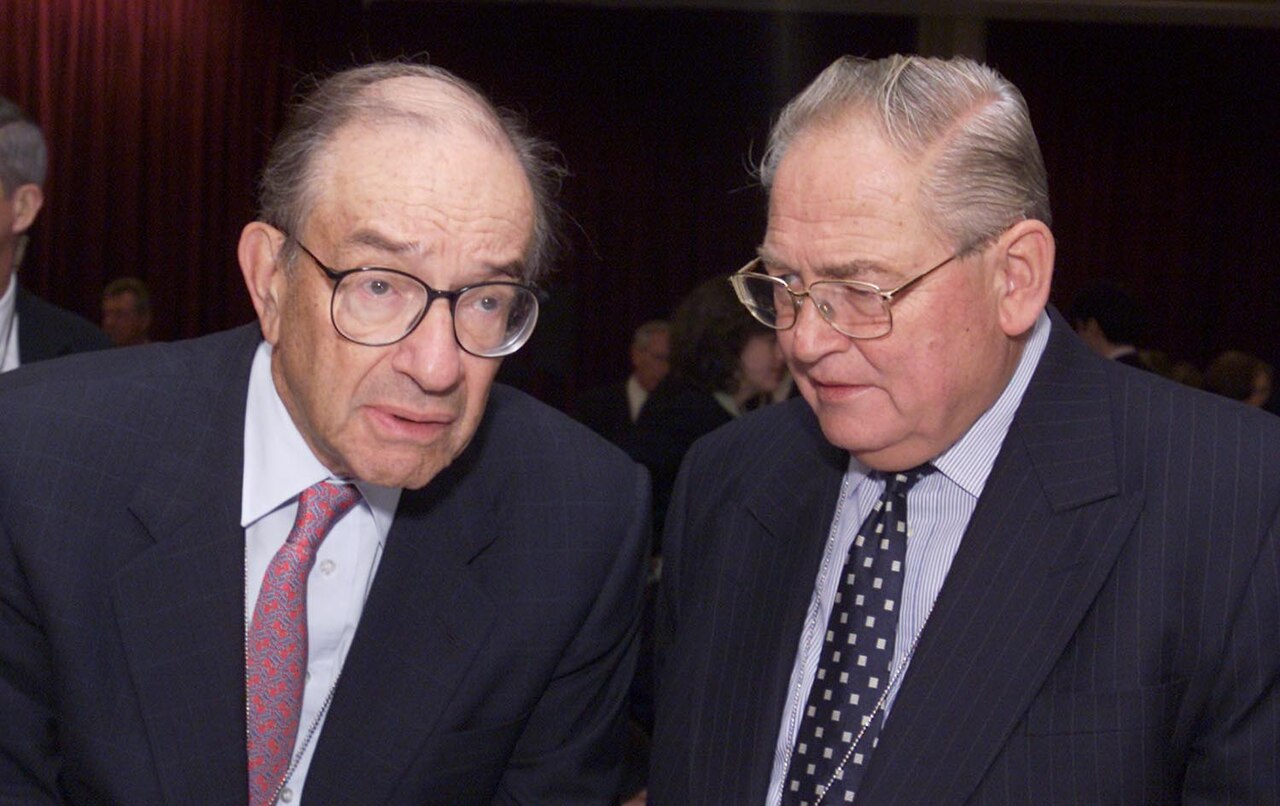
Former Federal Reserve chairman Alan Greenspan has ruled out any risk of a US default following Standard & Poor’s downgrade of the country’s credit rating.
“The United States can pay any debt it has because we can always print money to do that. So there is zero probability of default.”
He added that S&P had needlessly struck a blow to America’s self-esteem, creating unnecessary fear and uncertainty that would only make things worse in other markets, since they are reflected in the US economy.
The chairman of the White House Council of Economic Advisers, Austan Goolsbee, also attacked S&P over the downgrade, and joked about the agency’s failure at basic arithmetic, having got its numbers wrong by $2 trillion.
Alan Greenspan argued that investors should not be nervous about the economic situation in the United States but about the situation in Europe. According to Greenspan, the United States was on the right track, with slow growth but a forward-looking outlook and prosperity, until Italy got into trouble.
According to Greenspan, the epicenter of the nervousness is in Europe: the United States has quite a few subsidiaries in Europe, and American investors know that a country like Italy (the world’s seventh-largest economy) is too big to be bailed out. In fact, it cannot be bailed out, because it would drag the rest of Europe into a catastrophic situation.
This was Alan Greenspan’s view on a CNBC program, and his words are worrying, to say the least, especially the part about printing money.
Featured image: International Monetary Fund, Public domain, via Wikimedia Commons.