Editor’s note: This article was first published in April 2013. It is breaking news from 3-4 April 2013: the case counts (7 confirmed by the WHO, 9 according to Chinese authorities, 3 deaths), the risk assessment and the state of the survivors all refer to that week.
The World Health Organization (WHO) has reported that the H7N9 virus, which until now affected only birds, has mutated and can now infect humans more easily. According to the UN health agency, there are so far 7 confirmed cases of people infected with the H7N9 virus, although today the Chinese authorities raised that figure to 9, 3 of whom have already died.
WHO spokesman Gregory Hartl said there is still no evidence that the virus has spread from person to person, since the infected people have no links to one another and come from different areas, adding that the source of infection is probably “environmental”, which I’m not sure is any more reassuring.
According to ABC, 2 of the cases had been in contact with birds, while two others had not been in contact with birds but had been with pigs. Even ruling out pigs as the source of infection, they say that with the mutation any mammal could be infected.
The likelihood of more infections has gone from moderate to high, and the situation has become worrying, to the point that specialists are urging the authorities to go on alert and start monitoring animals and humans before a global spread can begin. If it keeps spreading through China and beyond, it would be an even more serious problem than the H5N1 virus: with H5N1 there were visible signs of the virus, such as birds dying, but here we have a silent virus that causes no visible symptoms in birds.
What symptoms does it cause in humans?
So far, all the cases began with fever and cough, like a very common and unalarming flu, which went on to develop into severe pneumonia. Those who have survived so far are in critical condition. So H7N9 is deadlier than Severe Acute Respiratory Syndrome (SARS), a virus that also came from China.
Further reading
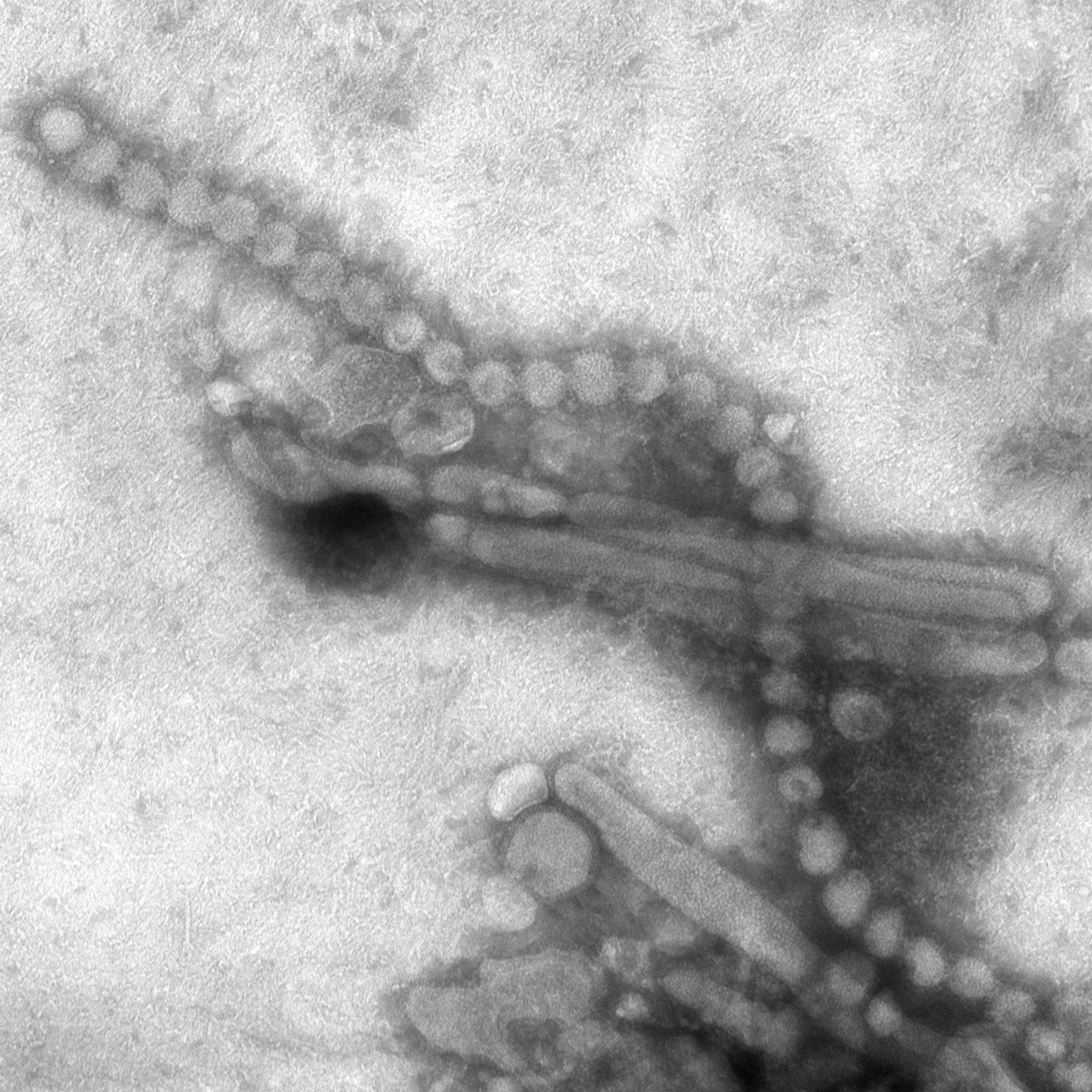
Featured image: Photo Credit: Cynthia S. Goldsmith and Thomas Rowe Content Providers: CDC/ Cynthia S. Goldsmith and Thomas Rowe, Public domain, via Wikimedia Commons.