

It may sound contradictory, but we all have flaws and strengths. In fact, as people we are the sum of all our flaws and strengths. And that’s how others should like us. With our flaws and strengths we will have to succeed in our relationships, in our careers and even in our own business.
If you focus exclusively on trying to fix all your flaws, you’ll end up frustrated, as well as wasting precious time you could have used to build on your virtues and strengths. And this applies to every area of life.
Everything works the same way: you end up getting whatever you focus on. So if you focus on all your shortcomings, even if only to change them, that is exactly what you’ll attract. And it’s not down to cosmic energy or anything of the sort. It’s pure science and brain mechanics.
See also: How learned helplessness can affect your life and your success
Let’s look at a few examples.
In relationships, it isn’t true that two people are attracted because they’re alike. Although that may happen in the short term, the truth is that in the long term, being with someone exactly like you can lead to extreme boredom.
Most arguments between couples tend to come from exactly the same thing that once attracted them to each other. And it shouldn’t be anything serious if those differences are handled the right way.
Robert Greene, in his book The Art of Seduction (which I recommend to anyone who works in sales), says that many couples spend too much time trying to fix what isn’t working in the relationship, when in fact they should be doing the opposite.
According to psychologist John M. Gottman, author of The Seven Principles for Making Marriage Work, couples thrive when they stop focusing on reducing the negative, each partner’s flaws, and start focusing on and building up the positive things and each partner’s strengths.
Don’t try to change anyone: Gottman’s years of research show that trying to change people doesn’t work.
In your own personal development exactly the same thing happens, and that’s why so many people live in constant bitterness, thinking about everything that limits them from doing things and everything they don’t have. That’s when frustration appears, an emotion that, rather than helping you, drags you down and holds you back.
Good things and bad things happen to all of us over the course of the day and the week. Whether your days are good or bad will depend on where you put your focus and how much weight you give the negative over the positive.
Have you ever heard someone say, “If I were good with numbers, I’d be…”? Put that way, it sounds like frustration at a limitation we’re placing on ourselves. Instead, ask yourself what you’re good at and what you’d like to do to improve your skills and reach that goal.
Personally, if I had a great talent for football, I suppose I would have become a big football star. But I have no talent for football, nor for basketball; I’m 1.70 m tall, so I’m not tall enough to be a catwalk model; and I’d make a terrible astronaut, too. If we play this game, we’ll win the prize: personal frustration through incompetence.
But the truth is that I couldn’t care less about what I can’t do, and that’s why, a long time ago, I focused on what I can do.
But be careful not to confuse natural limitations with failing to make essential changes in habits.
See also: 25 habits of successful people
I know there must be millions of things I wouldn’t be able to do, and many of them I clearly would never learn for lack of interest. But there are a few at which I consider myself extremely good. And every day I improve those skills, build on them and even extend them to other areas.
I know that “you can do anything you set your mind to” is very fashionable. But that’s completely false. Nobody can do everything they set out to do, absolutely nobody. And recognising this isn’t limiting yourself; rather, it’s being smart and expanding into everything you can do, and doing it not in a mediocre way but in an excellent one.
You won’t be able to win all your battles, so choose carefully the ones you’re willing to fight.
See also: Why some dreams shouldn’t be pursued
The same happens in business: every company has strengths and weaknesses, both ours and our competitors’.
As a small business, you can take on a big company, as long as you know its weak points and your strong points, and you’re clear that your strength must attack the competitor’s weakness.
If you try to bring down a company in its specialty, in its strength, you’ll lose. In other words, if a big corporation competes on price and can sell more cheaply because it buys in large volumes, don’t try to attack on price, giving up a margin you probably can’t afford and putting your company’s survival at risk. You can attack, for example, with more personal service or some other kind of added value.
A company grows when it makes the most of and specialises in something specific (its strength). Over time it will be able to win new markets, because it will acquire new strengths.
The battle of David and Goliath, negative-focus version
Allow me to end with a bit of humour. Imagine the battle between Goliath, that giant soldier, well covered in armour and carrying a great sword, one of the best warriors in hand-to-hand combat.
And on the other side we have David, a small, defenceless shepherd boy, unarmed and with no experience on the battlefield.
As Goliath came closer for the fight, David was thinking: “This sucks. That guy’s so big, so experienced, with that huge sword, and I’m so small.” Goliath kept coming closer while David kept thinking: “If only I had a shotgun, a pistol or something, because I can’t fight this giant. He’s going to kill me.”
And David went on: “If only someone would help me. This should be against the law, this is abuse. If I had even a spear or a sword…”
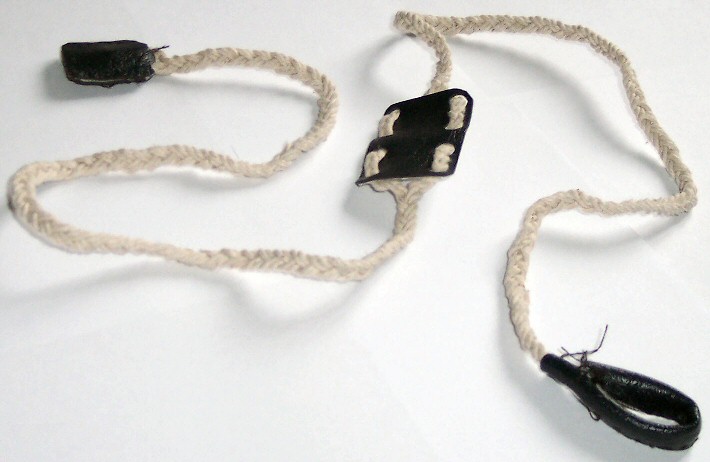
Until someone in the crowd watching the imminent clash shouted: “David, stop fooling around and use the sling in your hand!” And David used the sling and sent Goliath packing.
That’s what happens when you focus on what you have instead of what you don’t have. Remember when Malcolm Gladwell gave his own version of this biblical story: from Gladwell’s point of view, the one at a disadvantage wasn’t David but Goliath. Goliath came prepared for hand-to-hand combat (his strength), whereas David lacked a lot of what close combat requires, but had a single weapon for fighting at a distance, the sling, which was his strength for attacking the giant’s greatest weakness.
See also: The ultimate formula for success, and how Niagara syndrome gets in the way
Featured image: No machine-readable author provided. Ragzouken~commonswiki assumed (based on copyright claims), Public domain, via Wikimedia Commons.



